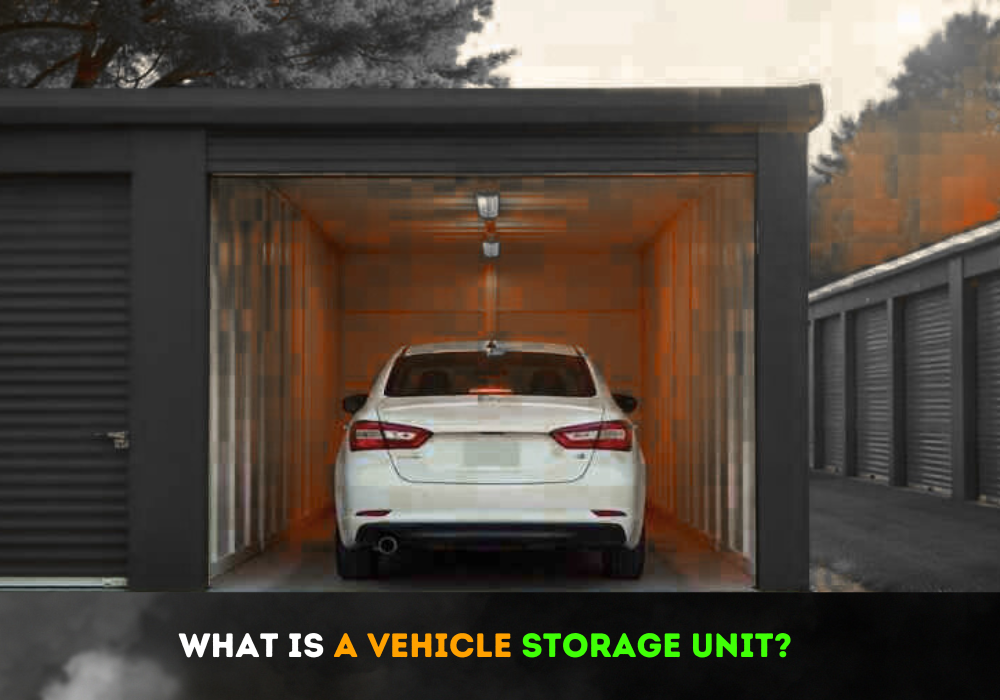
A vehicle storage unit is a purpose-built space used to store vehicles during non-operational periods to preserve condition, manage space, and reduce risk. It functions as a protection layer against weather exposure, unauthorized access, vandalism, and environmental degradation while addressing parking limitations created by residential density, seasonal usage, or regulatory restrictions. Storage becomes relevant when vehicle ownership exceeds available on-site capacity or when long-term inactivity increases exposure-related deterioration. Benefits follow directly from this use case and include controlled access, reduced maintenance risk, slower depreciation, and extended service life. Storage formats range from outdoor uncovered areas to covered outdoor spaces, indoor units, and climate-controlled facilities, each aligned with vehicle value, exposure sensitivity, and duration of storage. Selection depends on vehicle dimensions, climate conditions, access frequency, security requirements, and zoning constraints, with cost scaling predictably from lower-cost outdoor options to higher-cost climate-controlled indoor units. In aggregate, a vehicle storage unit operates as an asset-preservation system that balances protection level, access needs, and cost efficiency while maintaining vehicle condition, spatial order, and long-term value.
What does vehicle storage mean?
Vehicle storage means the placement of a motor vehicle in a designated facility for temporary or long-term non-use. The function is controlled holding rather than daily parking, which differentiates storage from residential garages and street parking. Storage facilities allocate space based on vehicle dimensions, access requirements, and duration of inactivity. This structure limits environmental exposure, reduces unauthorized access, and stabilizes vehicle condition during periods of disuse.
What is the primary purpose of using a vehicle storage unit?
The primary purpose of using a vehicle storage unit is vehicle preservation during inactive periods. Preservation occurs because storage removes continuous exposure to precipitation, ultraviolet radiation, temperature fluctuation, and unauthorized contact, which are direct contributors to corrosion, surface degradation, and mechanical wear. This purpose applies when vehicles remain unused due to seasonal operation, ownership volume, travel absence, or regulatory parking limits. By relocating vehicles into controlled storage unit, owners stabilize condition, reduce maintenance variables, and maintain readiness without consuming residential or commercial space.
How is a vehicle storage unit different from a traditional garage?
A vehicle storage unit differs from a traditional garage in function, structure, and operational intent. Storage units are engineered for long-duration holding, standardized vehicle accommodation, and managed access across multiple vehicle categories, including cars, motorcycles, RVs, boats, and fleet assets. Garages are residential extensions designed for daily use, limited capacity, and minimal environmental control. Storage facilities incorporate scalable security, variable protection levels, and flexible lease terms, whereas garages prioritize convenience over long-term asset preservation.
When does it make sense to book a vehicle storage unit?
Booking a vehicle storage unit makes sense when vehicle inactivity extends beyond routine parking use and exposure becomes continuous. This occurs during seasonal operation, long-term travel, temporary relocation, deployment, or fleet cycling. As inactivity increases, vehicles remain stationary while exposure accumulates. Accumulated exposure accelerates corrosion, battery discharge, tire flat-spotting, and surface deterioration. Storage interrupts this sequence by relocating the vehicle into a controlled holding environment that limits exposure while resolving residential or regulatory parking constraints.
What are the main benefits of using a vehicle storage unit?
The main benefits of using a vehicle storage unit focus on protection, safety, and convenience. These benefits arise once vehicles transition from uncontrolled parking conditions to designated storage environments.
- Reduce exposure by limiting precipitation contact, ultraviolet radiation, temperature variation, and airborne contaminants that accelerate corrosion and material fatigue.
- Lower security risk through controlled access, restricted entry points, and perimeter oversight that reduce theft and vandalism incidence.
- Preserve condition by slowing paint oxidation, interior degradation, fluid breakdown, and mechanical wear during extended non-use.
- Recover space by removing inactive vehicles from driveways, garages, and lots, improving spatial organization and regulatory alignment.
- Simplify handling by maintaining vehicles in a stationary, accessible, and protected state without repeated relocation or reactive maintenance.
What types of vehicle storage units are available?
Vehicle storage units differ by enclosure structure, exposure control, and access management. These differences exist because exposure duration and protection level directly affect corrosion rate, surface degradation, and mechanical reliability.
The main types of vehicle storage units include the following.
- Uncovered parking spaces consist of marked outdoor areas without physical shielding. Vehicles remain exposed to rain, ultraviolet radiation, temperature fluctuation, and airborne debris, which limits suitability to short-term storage and low-sensitivity vehicles.
- Covered parking spaces introduce overhead structures that block direct precipitation and solar radiation. This design reduces paint oxidation and interior heat accumulation while maintaining airflow and straightforward access.
- Shared indoor units house multiple vehicles inside an enclosed building. This configuration removes direct weather exposure and improves security through restricted facility access, supporting longer storage durations.
- Personal enclosed units provide single-vehicle, fully enclosed spaces with controlled entry and optional climate regulation. This format supports long-term storage, high-value vehicles, and assets sensitive to humidity and temperature variation.
These unit types form a progression from minimal exposure control to maximum environmental and access control.
Do different types of vehicles require different storage solutions?
Yes, different vehicles require different storage solutions because physical dimensions, construction materials, and usage cycles vary. Motorcycles require moisture control and upright stabilization. Passenger cars require moderate enclosure. RVs and boats require oversized clearance. Fleet vehicles require scalable access and turnover efficiency.
What factors should be considered when choosing a vehicle storage unit?
Choosing a vehicle storage unit requires aligning vehicle risk exposure with storage conditions. Each factor influences deterioration rate and operational usability.
When choosing a storage unit, consider the following factors.
- Security features such as gated access, surveillance systems, and controlled entry that reduce unauthorized contact.
- Environmental protection level determined by local climate patterns, precipitation frequency, humidity, and temperature variation.
- Vehicle dimensions including exact length, width, height, and clearance requirements, especially for oversized vehicles.
- Access frequency defining how often the vehicle must be retrieved, which affects unit placement and facility layout.
- Storage duration influences enclosure choice, climate control necessity, and cost efficiency over time.
These factors operate together to determine whether a storage unit preserves vehicle condition while supporting practical access and long-term management.
How much does vehicle storage typically cost, and what factors affect the price?
Vehicle storage typically costs between $50 and $300 per month, with price directly determined by protection level, location, and unit type. Outdoor uncovered storage occupies the lowest cost range because it provides space allocation without environmental shielding. Covered outdoor storage costs more because overhead structures reduce precipitation and ultraviolet exposure. Indoor shared units increase cost further by eliminating direct weather exposure and adding controlled facility access. Personal enclosed units command the highest prices because they combine exclusive space, security infrastructure, and optional climate regulation.
Cost escalates as exposure decreases. Geographic density increases pricing because urban land scarcity limits availability. Storage duration influences monthly rates because longer commitments often reduce per-month cost. Security features affect pricing because surveillance systems, gated access, and on-site monitoring increase operational expense. Seasonal demand alters pricing because winter and summer storage periods increase utilization rates.
Is insurance required when storing a vehicle in a storage unit?
Yes, insurance is required when storing a vehicle in a storage unit. Storage facilities require insurance because vehicles remain valuable assets exposed to theft, fire, vandalism, and environmental damage. Standard auto insurance may reduce coverage during non-operational periods, which creates coverage gaps. Storage-specific insurance or comprehensive coverage fills this gap by covering risks while the vehicle remains stationary.
How should a vehicle be prepared before being placed into storage?
Before placing a vehicle into a storage unit preparation is crucial because it prevents damage to the engine, battery, tires, and exterior during storage. Storage preparation focuses on reducing mechanical stress, environmental exposure, and biological intrusion while the vehicle remains inactive.
- Mechanical Preparation starts with a maintenance check to confirm fluid integrity and component condition. Change engine oil to remove contaminants. Stabilize fuel to prevent oxidation. Inflate tires to recommended pressure to reduce flat-spotting. Install a battery maintainer or disconnect the battery to prevent discharge during extended storage.
- Pest Prevention and Other Precautions involve sealing openings, placing deterrents near entry points, and inspecting wiring channels. Rodents target insulation and electrical systems during inactivity, which creates functional damage.
- Exterior and Interior preparation requires washing and drying the vehicle to remove corrosive residues. Wax protects paint surfaces. Clean interiors prevent odor development and material breakdown. Crack windows slightly in enclosed units to reduce humidity accumulation while maintaining airflow.
These preparation actions operate together to maintain structural integrity, preserve appearance, and support mechanical readiness throughout the storage period.
Can a stored vehicle be accessed during the storage period?
Yes, a stored vehicle can be accessed during the storage period, subject to facility access rules and unit type. Vehicle storage facilities are designed for controlled retrieval rather than permanent immobilization, which means access is typically permitted during posted operating hours. Access conditions depend on storage format because outdoor and covered parking spaces allow direct entry, while shared indoor and personal enclosed units require gate authorization, identity verification, or scheduled access to preserve security and environmental stability. Access frequency may be limited to prevent disruption of other stored vehicles, but retrieval, inspection, and repositioning remain part of standard storage use.
Who is responsible for vehicle maintenance during the storage period?
The vehicle owner remains fully responsible for vehicle maintenance during the storage period. Storage facilities provide physical space, environmental shielding, and security infrastructure, but they do not assume mechanical or operational responsibility. Maintenance responsibility stays with the owner because storage agreements exclude oil circulation, battery charging, tire pressure adjustment, fuel stabilization, and fluid monitoring. Mechanical degradation progresses during inactivity, not during movement, which means owner-managed preparation and periodic checks determine post-storage operability. Facility staff intervene only when a stored vehicle creates safety, leakage, or compliance risks, not to perform preventive or corrective maintenance.
What is the process for dropping off and retrieving a vehicle from storage?
The process for dropping off and retrieving a vehicle from storage follows a defined operational sequence that establishes custody, protects the vehicle, and controls access. Each stage exists to reduce risk, document responsibility, and maintain facility order.
The process of vehicle storage handling includes the following steps.
- Verify eligibility by confirming identity, vehicle registration, insurance status, and storage agreement, which legally assigns custody and access rights.
- Document condition through recorded inspection, photographs, or intake forms that capture exterior state, existing damage, mileage, and fuel level at arrival.
- Assign location by directing the vehicle to a specific space based on unit type, clearance limits, traffic flow, and emergency access requirements.
- Secure placement by locking the vehicle, disabling unnecessary systems, activating facility security controls, and confirming storage readiness.
- Control retrieval by requiring access authorization, identity verification, and exit documentation before the vehicle leaves the facility.
This sequence maintains traceability from entry to exit, prevents unauthorized movement, and preserves both vehicle condition and facility compliance.
Are there restrictions on storing multiple vehicles at one storage facility?
Yes, storage facilities usually restrict the number of vehicles a single customer can store at one location. Restrictions exist because zoning laws, fire codes, traffic flow design, and space allocation define maximum vehicle density. Facilities may limit vehicle count per lease, per unit size, or per account. Larger facilities may allow multiple vehicles only when each vehicle occupies a designated space and meets size, weight, and access rules. These restrictions preserve safety, accessibility, and regulatory compliance rather than limiting ownership flexibility.