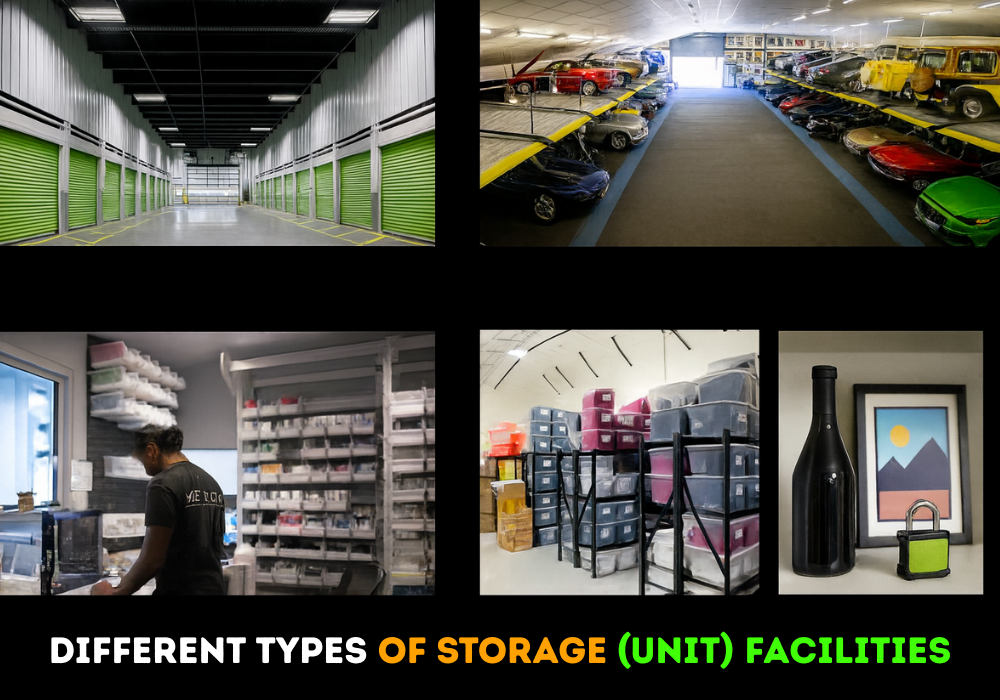
A storage facility is a commercial property that rents individual units for short- or long-term use and provides secure space protected from theft, weather, and limited room at home or work. These facilities offer seven main types of units: indoor storage, outdoor and drive-up storage, climate-controlled storage, portable and mobile storage, vehicle storage, business storage, and specialty storage. Indoor units sit inside a fully enclosed building, while outdoor and drive-up units allow direct vehicle access for quick loading. Climate-controlled units keep temperature and humidity steady for sensitive items, and portable or mobile units are delivered to a customer’s location for flexible use. Vehicle storage holds cars, boats, motorcycles, and RVs. Business storage supports inventory, equipment, and documents, and specialty storage is designed for items that require specific conditions, such as wine, artwork, or firearms. Storage units typically come in three size groups—small (25–50 sq. ft.), medium (75–150 sq. ft.), and large (200–300+ sq. ft.). The right size depends on the items being stored, how often they need to be accessed, and how long they will stay in storage.
What is a Storage Facility?
A storage facility (unit) is a commercial property with individual lockable units rented to people and businesses for storing belongings, inventory, vehicles, and specialty items. These storage facilities can be single-story or multi-story buildings, with units ranging from about 25 to over 300 square feet. Common security features include CCTV surveillance, controlled access gates, individual unit locks, and on-site staff. Rentals are offered on flexible terms, and monthly costs depend on unit size, location, and features such as climate control or drive-up access.
What are the Different Types of Storage Units (Facilities)?
The main types of storage units are indoor storage, outdoor and drive-up storage, climate-controlled storage, portable and mobile storage, vehicle storage, business storage, and specialty storage.
- Indoor Storage: Units inside enclosed buildings with hallway access. They protect items from weather, temperature changes, and provide added security.
- Outdoor and Drive-Up Storage: Ground-level units with exterior roll-up doors. Vehicles can pull up directly to the unit for quick loading and unloading.
- Climate-Controlled Storage: Units that keep temperature and humidity stable to protect sensitive items from moisture, warping, cracking, and mold.
- Portable and Mobile Storage: Containers delivered to the customer’s location for loading. They are then moved to a storage facility or new destination.
- Vehicle Storage: Spaces for cars, motorcycles, boats, RVs, and trailers. Options include open, covered, or fully enclosed storage.
- Business Storage: Units for commercial inventory, equipment, documents, and supplies. Some facilities offer extended access and workspace options.
- Specialty Storage: Units designed for items that need specific conditions or higher security, such as wine, artwork, firearms, medical records, or film archives.
Each storage type serves different needs based on the items being stored, how long they will be stored, and how often they need to be accessed.
1. Indoor Storage
Indoor storage units are located inside enclosed buildings with access through interior hallways, elevators, and secured entry points. These units are part of single-story or multi-story facilities where renters enter the main building and reach their unit in a controlled indoor environment. Indoor storage is commonly used for household moves, apartment downsizing, and long-term storage of everyday belongings when weather protection is important. Key advantages include protection from outdoor elements, more stable temperatures than outdoor units, stronger security through restricted building access, and cleaner conditions with less dust and debris. Indoor storage works well for furniture, mattresses, clothing, electronics, books, appliances, and boxed personal items. Items that require strict temperature or humidity control, such as antiques, fine art, or wine, should be stored in climate-controlled units instead. Indoor storage typically costs 10 to 15 percent less than climate-controlled options, making it an affordable choice for household items that tolerate normal temperature changes.
2. Outdoor and Drive-Up Storage
Outdoor and drive-up storage units are ground-level spaces with exterior roll-up doors that open directly to the driveway. They function like private garages where renters can park a vehicle in front of the unit for quick loading and unloading without using hallways or elevators. Drive-up storage is ideal for renters who need frequent access, store heavy or bulky items, or want fast load and unload times. Benefits include direct vehicle access, wide door openings, and simple movement of large items. These units suit contractors who access tools daily, businesses with rotating inventory, and families moving large belongings. Commonly stored items include furniture, appliances, tools, sporting equipment, seasonal decorations, and motorized equipment. Because these units follow outdoor temperatures, they are not suitable for sensitive items such as electronics, wooden antiques, leather furniture, or photographs. Drive-up units usually cost 5 to 20 percent less than indoor units, making them one of the most cost-effective options for durable items that require frequent access.
3. Climate-Controlled Storage
Climate-controlled storage units maintain stable temperature and humidity levels through HVAC systems to protect sensitive items from environmental damage. These units operate inside insulated, ventilated buildings where air circulation and temperature regulation run continuously throughout the year. Climate-controlled storage is used for long-term preservation, for storage in regions with extreme temperatures, and for items that can be damaged by heat, cold, or moisture. Benefits include protection against warping, cracking, mold, mildew, rust, and fading. This type of storage suits collectors, families storing heirlooms, and businesses with sensitive inventory. Suitable items include wooden furniture, leather goods, electronics, musical instruments, artwork, photographs, important documents, wine, antiques, and medical or precision equipment. Items that are not sensitive, such as metal tools, outdoor furniture, and automotive parts, can be stored in standard units at a lower cost. Climate-controlled units generally cost 20 to 50 percent more than standard storage and often range from 125 to 300 dollars per month for mid-sized units. They provide essential protection for high-value or irreplaceable belongings.
4. Portable and Mobile Storage
Portable and mobile storage uses containers delivered directly to a customer’s location for on-site loading. Once filled, the container is taken to a storage facility or transported to a new address. Common container sizes include 8-foot, 12-foot, and 16-foot units. This type of storage is used for home moves, property renovations, temporary transitions, and military relocations. It removes the need to hire a van, allows flexible loading at the customer’s pace, and combines moving and storage in one service. It suits homeowners renovating, families relocating, military personnel, and anyone who prefers loading from home. Typical items include furniture, appliances, mattresses, and boxed belongings. Items sensitive to temperature or humidity, such as electronics or antiques, should be stored in a climate-controlled facility because most portable containers do not regulate heat or moisture. Costs generally range from £150 to £350 per month for the container, with delivery and collection adding £50 to £150, resulting in a total of £200 to £500 per month.
5. Vehicle Storage
Vehicle storage provides dedicated parking or enclosed spaces for cars, motorcycles, boats, caravans, motorhomes, and trailers. Demand continues to grow as ownership of leisure vehicles and classic cars increases. This type of storage is used when homeowners lack space, want seasonal parking, or need additional security for high-value vehicles. Vehicle storage offers monitored security, weather protection, and options suited to different vehicle sizes, including those over 40 feet. Suitable vehicles include cars, vans, motorcycles, ATVs, boats on trailers, caravans, campervans, and motorhomes. Costs depend on the type of space. Open parking typically ranges from £50 to £150 per month, covered spaces from £100 to £250, and enclosed units from £200 to £450.
6. Business Storage
Business storage provides commercial units for inventory, equipment, documents, and office supplies, with flexible access and scalable space options. Many organizations use storage units to reduce property costs and avoid long warehouse leases. This type of storage supports inventory overflow, seasonal stock, document archiving, equipment storage, and office relocations. It offers lower overheads, month-to-month agreements, tax-deductible expenses, and the ability to increase or reduce space as business needs change. It suits e-commerce sellers managing stock, contractors storing tools and materials, retailers with seasonal products, and offices archiving records. Suitable items include inventory, office furniture, filing cabinets, marketing materials, tools, and business documents. Climate-controlled units are often preferred for electronics, healthcare supplies, and temperature-sensitive goods. Business storage typically costs £100 to £500 per month depending on size, with 10×20-foot units averaging £200 to £300 per month, which is generally more affordable than traditional warehouse space.
7. Specialty Storage
Specialty storage provides highly controlled environments, advanced security, and specialized handling for valuable or regulated items. Wine storage maintains temperatures around 55°F, art storage keeps humidity between 40 and 50 percent, and firearm storage includes strict security and compliance standards. Specialty storage facilities are used by collectors, professional organizations, and industries that require precise preservation or documented chain-of-custody. Benefits include preservation-grade climate control, insurance-approved security, regulatory compliance, and staff trained in handling delicate items. Typical users include wine collectors, art galleries, firearm owners, medical practices, film archives, pharmaceutical companies, and estates managing valuable collections. Suitable items include wine, fine art, firearms, fur garments, musical instruments, film negatives, medical records, and pharmaceutical stock. Items that do not require specialised conditions are more cost-effective to store in standard or climate-controlled units. Pricing commonly ranges from £15 to £50 per case for wine, £50 to £200 per art piece, and £25 to £100 per month for firearm storage depending on security levels.
What are the Standard Storage Unit Sizes?
Standard storage unit sizes generally fall into three groups: small (25–75 square feet), medium (100–150 square feet), and large (200–300 square feet). Most facilities offer units with an internal height of around 8 feet. The 10×10 unit (100 square feet) is typically the most commonly rented size across the UK. Prices vary by location, with city facilities charging more than suburban or rural sites, and climate-controlled units costing more than standard units.
Small Storage Units (25–75 sq ft)
| Size | Square Feet | Capacity | Typical Monthly Cost |
| 5×5 | 25 sq ft | Small cupboard; dresser, small mattress, 15–20 boxes, seasonal items | £40–£80 |
| 5×10 | 50 sq ft | Walk-in cupboard; studio contents, queen mattress, ~30 boxes | £50–£100 |
| 5×15 | 75 sq ft | Small bedroom; one-bedroom flat furniture and appliances | £80–£150 |
Medium Storage Units (100–150 sq ft)
| Size | Square Feet | Capacity | Typical Monthly Cost |
| 10×10 | 100 sq ft | Standard bedroom; two-bedroom flat, sofa set, 50–60 boxes | £100–£180 |
| 10×15 | 150 sq ft | Large bedroom; two–three-bedroom home and large appliances | £130–£250 |
Large Storage Units (200–300 sq ft)
| Size | Square Feet | Capacity | Typical Monthly Cost |
| 10×20 | 200 sq ft | Single garage; three–four-bedroom home or small vehicle | £150–£300 |
| 10×25 | 250 sq ft | Large single garage; four-bedroom home, multiple furniture sets | £170–£350 |
| 10×30 | 300 sq ft | Double garage; five-bedroom home, vehicles, or large equipment | £200–£450 |
Climate-controlled units usually cost 15–25% more. Facilities in central urban areas often charge 20–40% more than those in suburban or rural locations.
How to Choose the Right Storage Unit Size
Choosing the correct storage unit size involves listing your items, measuring larger pieces, estimating the total floor space needed, and selecting a unit slightly larger than your estimated requirement.
- List all items by category: Include furniture, appliances, boxes, and any bulky items needing floor space.
- Measure the largest items: Record the length and width of sofas, mattresses, appliances, and storage furniture, as these define the minimum unit width.
- Calculate approximate square footage: Multiply the estimated length and width of your packed items. For example, an 8×10-foot footprint requires at least 80 square feet.
- Add a 10–15% buffer: Extra space provides room for walkways, airflow, and future items without needing a larger unit later.
- Match home size to unit size: A studio flat typically fits in a 5×10 unit. A two-bedroom home generally fits in a 10×10. A four-bedroom home often fits in a 10×20.
- Use vertical space effectively: Boxes stack up to four high safely, and furniture can usually be stacked two pieces high. Efficient stacking reduces the required floor space by 30–50%.
- Consider how often you need access: Frequent access requires wider internal aisles and easier reach to items near the door. Long-term storage allows tighter packing.
Choosing a unit one size larger typically adds £20–£50 per month but prevents overcrowding, reduces damage risk, and makes it easier to retrieve items throughout the rental period.
How Can I Maximize Space in My Storage Unit?
To maximize space in a storage unit, stack items vertically, break down large furniture, use hollow areas, and leave a centre aisle for access. Start by placing heavy boxes on the floor, then stack lighter boxes on top, up to four high to keep the stack stable. Position large items such as sofas, bed frames, and tables against the walls, and disassemble anything that can be taken apart to reduce the space it occupies. Keep small hardware pieces in labelled bags attached to their furniture so they don’t get misplaced. Use empty spaces inside dressers, wardrobes, appliances, and suitcases to store clothes and smaller items. Standard medium boxes measuring 18″ x 18″ x 16″ stack evenly, and vacuum bags reduce the volume of clothing and bedding by up to 80 percent to save space. Freestanding shelves add extra levels for lighter items. A clear centre aisle makes it easier to reach the back of the unit, and placing frequently needed items near the door improves access. Clear plastic bins help you see contents quickly, and storing sofas and mattresses upright frees more floor space for boxes.
Is It Possible to Access a Storage Unit at Any Time?
Yes, some storage facilities offer 24-hour access, but many operate fixed opening times, usually from early morning to late evening. Selected locations allow full-time entry through gate codes, key cards, or mobile app systems, and some charge an extra monthly fee for this option. This can be useful for shift workers, business owners, or anyone who needs flexible hours. Facilities with 24-hour access rely on CCTV, secure entry systems, and good lighting to maintain safety. Because access options vary between sites, it is important to check the exact hours and any extra charges before renting.
Where Can I Find Storage Facilities in Bristol?
Storage facilities in Bristol are located across the city, including areas such as the city centre, Brislington, Avonmouth, Bedminster, Filton, and Yate. Unit sizes range from small 10-square-foot lockers to large warehouse-style rooms of around 2,000 square feet, and prices often start at around £5 per week for the smallest units, depending on promotions and location.
- Safestore Bristol: Multiple locations including Ashton Gate, Pennywell Road, Brislington, and Filton with CCTV, intruder alarms, secure PIN entry, and free trolleys.
- Storage Giant Bristol (Brislington): Located on Bath Road with more than 55,000 square feet of space, over 800 units, competitive pricing, and quick access to major roads.
- UK Storage Company Bristol: Sites in Bedminster (Central), Avonmouth (West), and Yate (North) offering CCTV, PIN access, flexible rentals, and 24-hour access at selected locations.
- Big Yellow Self Storage Bristol Central: Positioned near St Philips Causeway with a range of unit sizes, monitored CCTV, staffed reception during opening hours, and introductory discounts.
- Vanguard Self Storage Bristol (Redfield): Units from 10 to 2,000 square feet, free parking, loading bay, EV charging, meeting room hire, and convenient access via Lawrence Hill station.
Do Movers Also Offer Storage Facilities in Bristol?
Yes, Bristol removals companies provide storage through warehouse container units and self-access rooms integrated with their moving services. They use sealed wooden containers, steel transit containers, and indoor storage rooms to hold furniture, documents, and inventory during property delays, renovations, chain gaps, overseas moves, and long-term downsizing. Containerised storage keeps items sealed from loading to redelivery, which limits handling and reduces risk. Self-access storage places items in individual units accessed during set hours. These formats cover short- and long-term needs and allow one provider to manage collection, storage, and final delivery under a single chain of custody.
Which is the Best Moving Company in Bristol That Offers Storage Facilities?
MO Transport provides removals and storage in Bristol using warehouse storage for household furniture, commercial equipment, archive boxes, and specialist items. The facility uses CCTV, PIN entry, and fire-detection systems to protect stored goods. Items remain in sealed containers under stable indoor conditions, reducing moisture exposure that affects wood, electronics, fabrics, and paper. Containerised storage limits handling to loading and unloading, improving consistency during long-term storage. Rental terms start from one week and continue monthly. MO Transport manages inventories, schedules retrievals, and serves Bristol, Clifton, Bedminster, Brislington, Avonmouth, Bath, Keynsham, and Portishead through a unified moving-and-storage operation.
How Can I Rent Storage Facilities in Bristol from MO Transport?
To rent storage facilities from MO Transport, contact our team, receive a quote, confirm booking, and schedule move-in, completing the process in four steps.
- Submit an enquiry: Provide your item list, estimated volume, and required storage duration so capacity can be calculated accurately.
- Receive a quote: The quote outlines capacity needs, monthly cost, recommended unit or container size, collection options, and insurance.
- Confirm booking: Provide identification, payment details, and a start date; storage terms begin from one week.
- Arrange collection or self-delivery: Items move directly into allocated storage with an inventory recorded on arrival.
Access or retrieve goods: Contact the team to schedule access or request redelivery when needed.