
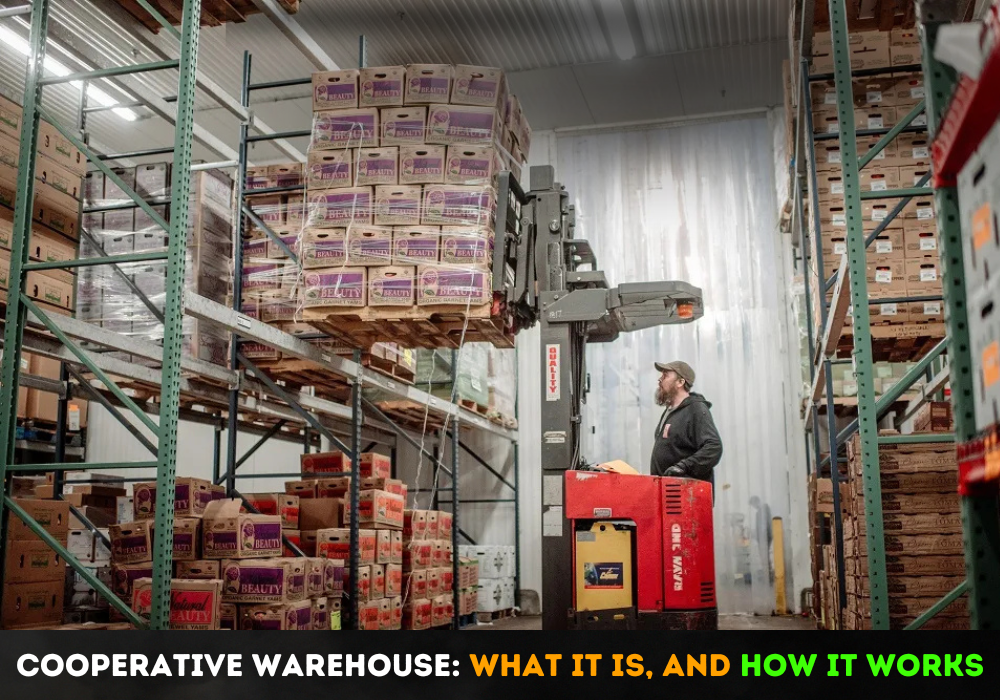
A cooperative warehouse is a shared logistics facility where multiple independent businesses collectively use storage space, handling infrastructure, and operational services under a unified governance framework. Its primary function is to consolidate warehousing resources so participating firms reduce individual cost burdens, stabilize capacity usage, and distribute operational exposure without owning separate facilities.
Because resources are pooled, cooperative warehousing lowers per-unit storage costs, increases space utilization rates, and provides shared access to labor, equipment, and warehouse systems. At the same time, this shared structure introduces coordination risk, governance dependency, and collective decision constraints, since operational outcomes depend on aligned participation rather than unilateral control.
Operationally, cooperative warehouses function through predefined agreements that connect space allocation, cost-sharing formulas, inventory accountability, and service-level execution into a single operating structure. This alignment enables consistent daily operations while maintaining cost efficiency across participants with comparable logistics requirements.
This model primarily serves small and mid-sized enterprises, seasonal operators, and businesses with fluctuating inventory volumes that require flexibility without long-term capital commitments. Choosing the right cooperative warehouse depends on geographic relevance, governance clarity, scalability capacity, cost transparency, and operational compatibility, ensuring that shared infrastructure supports demand patterns without creating structural friction.
What is a cooperative warehouse?
A cooperative warehouse is a warehousing facility jointly used and collectively governed by two or more independent businesses that share physical storage space, material-handling resources, labor, and operating costs. The arrangement is formalized through a cooperative or membership-based agreement that specifies access rights, cost-sharing formulas, operational rules, and accountability. The warehouse does not serve the open market and is not controlled by a single firm. Only member businesses participate in its use and governance.
How does a cooperative warehouse differ from other warehouse types?
A cooperative warehouse differs from other warehouse types based on ownership, access, and control. A private warehouse is owned and operated by one company for its exclusive use. A public warehouse offers storage and services to any customer on a fee basis. A contract warehouse is operated by a third-party provider under a service agreement. A cooperative warehouse restricts access to member businesses only and distributes costs, risks, and decision-making authority collectively rather than centrally or commercially.
What is the purpose of cooperative warehousing?
The purpose of cooperative warehousing is to reduce individual warehousing costs, improve storage and labor utilization, and share operational risk among participating businesses. It enables firms to access warehousing infrastructure and logistics services without full ownership, supports variable or seasonal inventory demand, and increases efficiency through pooled resources and coordinated operations.
What are the key advantages of cooperative warehousing?
The key advantages of cooperative warehousing result from shared infrastructure, collective cost allocation, and coordinated logistics operations that improve efficiency for all participating businesses.
- Lower fixed costs by distributing rent, utilities, insurance, and maintenance expenses across multiple members instead of a single firm.
- Increase space utilization by reallocating unused capacity among members, reducing idle storage and improving turnover efficiency.
- Share capital-intensive assets such as forklifts, racking systems, docks, and warehouse management systems without individual investment.
- Optimize labor efficiency by pooling warehouse staff, which lowers per-unit handling costs and stabilizes workforce utilization.
- Improve demand flexibility by allowing members to scale space usage up or down based on inventory fluctuations.
- Reduce capital exposure by eliminating the need for land acquisition, facility construction, or long-term lease commitments.
- Distribute operational risk across participants, reducing the financial impact of demand volatility or temporary disruptions.
- Enable competitive parity by giving smaller firms access to logistics capabilities similar to those of larger enterprises.
Taken together, these advantages explain why cooperative warehousing improves cost efficiency, operational flexibility, and access to logistics infrastructure when member requirements remain aligned.
What are the key disadvantages of cooperative warehousing?
The key disadvantages of cooperative warehousing arise from shared control structures, interdependence among members, and reduced operational autonomy.
- Slow decision-making because changes to operations, pricing, or capacity require collective agreement.
- Limit individual control since members cannot unilaterally modify workflows, layouts, or service priorities.
- Create coordination friction when participant volumes, schedules, or operational priorities diverge.
- Increase governance complexity through shared management structures, voting mechanisms, and conflict resolution processes.
- Amplify dependency risk because disruptions caused by one member can affect the entire cooperative operation.
Together, these disadvantages show that cooperative warehousing functions effectively only when member businesses maintain aligned objectives, compatible operating models, and stable collaboration frameworks.
How does cooperative warehousing operate in practice?
Cooperative warehousing operates through a shared operational model governed by formal agreements among participating businesses. These agreements define space allocation, cost-sharing formulas, labor usage, and service standards, which align all members under one operational structure. Daily activities such as receiving, storage, picking, and dispatch follow standardized procedures, allowing centralized handling while inventory ownership and stock accountability remain with each individual business.
Which types of businesses are best suited for cooperative warehousing?
Businesses with variable inventory volumes and limited capital resources are best suited for cooperative warehousing. Small and mid-sized enterprises, seasonal retailers, agricultural producers, wholesalers, and regional distributors benefit because their demand patterns align with shared capacity models. This alignment allows flexible space usage and cost efficiency without requiring long-term facility ownership or dedicated infrastructure.
Is cooperative warehousing suitable for every business?
No, cooperative warehousing is not suitable for every business. Firms that require full operational autonomy, proprietary handling processes, continuous high-volume throughput, or specialized storage environments experience constraints under shared governance, because collective decision-making limits customization and reduces response speed when operational needs differ.
What factors should businesses consider when selecting a cooperative warehouse?
The factors businesses should consider when selecting a cooperative warehouse directly affect operational alignment and cost efficiency and include:
- Location relevance, ensuring proximity to supply and distribution networks.
- Governance structure, providing clear decision authority and conflict resolution.
- Cost allocation transparency, covering space, labor, utilities, and shared services.
- Scalability capacity, supporting growth and seasonal volume changes.
- Operational compatibility, matching warehouse processes to inventory characteristics.
Together, these factors ensure that cooperative warehousing supports logistics requirements without introducing coordination friction or dependency risk.
What costs are typically associated with cooperative warehousing?
The costs associated with cooperative warehousing are shared operational and infrastructure expenses allocated among member businesses. These costs include proportional payments for facility rent or financing, utilities, insurance, maintenance, shared labor wages, material-handling equipment, warehouse management systems, and administrative governance, with allocation tied directly to space usage, handling volume, or predefined cost formulas.
What alternatives to cooperative warehousing are available to businesses?
Alternatives to cooperative warehousing include private, public, contract, and on-demand warehousing models that differ in ownership, control, and cost structure. Businesses choose private warehouses for full control, public warehouses for short-term access, contract warehouses for outsourced operations, or on-demand networks for flexible, technology-enabled capacity without shared governance.