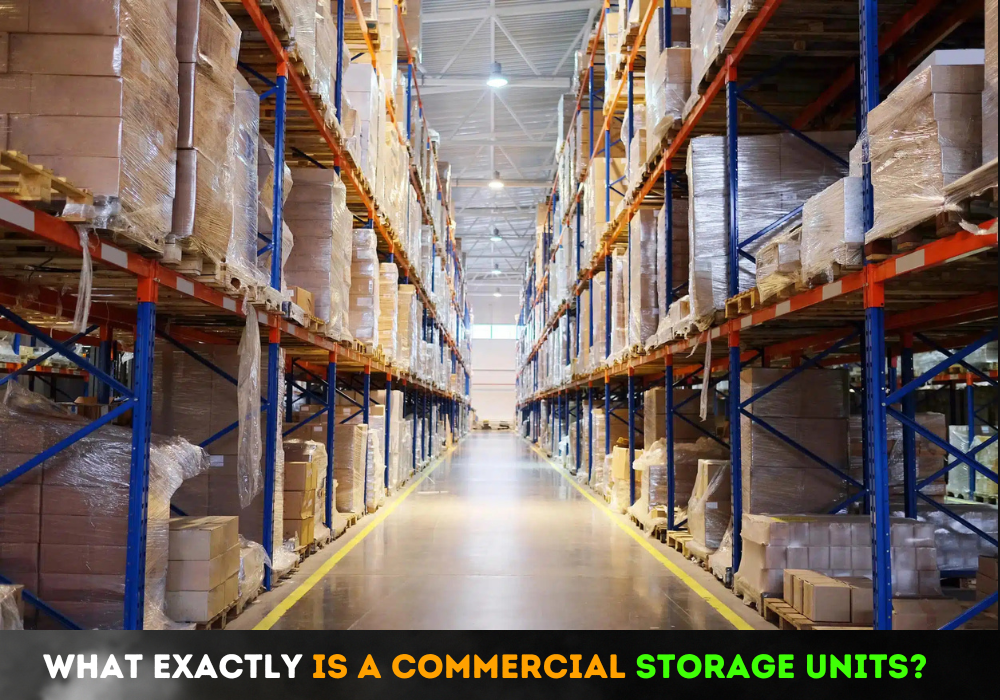
Commercial storage units are secure, off-site spaces that businesses use to hold inventory, equipment, documents, furniture, and operational assets once on-site space reaches its functional limit. That space limit creates pressure first on daily operations, then on costs, because crowded premises reduce efficiency and force businesses toward larger, more expensive properties. External storage resolves that pressure by separating storage needs from active work areas while keeping assets accessible. This separation explains why e-commerce retailers, construction companies, real estate professionals, professional service firms, hospitality businesses, creatives, event planners, and pharmaceutical representatives use commercial storage units, since these sectors manage fluctuating inventory, bulky tools, archived records, or seasonal stock. Because usage patterns vary, the benefits follow directly, including scalable space, predictable monthly expenses, clearer inventory organization, safer asset handling, and uninterrupted workflows. Pricing reflects the same structure, as costs depend on location, unit size, access frequency, security level, and rental duration, with most providers charging monthly rates per square foot instead of fixed long-term leases. Selection therefore follows a single decision logic, where storage volume, access needs, compliance requirements, security features, insurance coverage, and total cost connect into one evaluation process. When these elements align, commercial storage units act as an operational extension rather than a separate expense, supporting stability, controlled growth, and efficient resource use without expanding core premises.
What is a commercial storage unit?
A commercial storage unit is a secure, off-site space used by businesses to store inventory, equipment, documents, furniture, and operational assets when on-site space is no longer sufficient. This definition centers on function, because the unit exists to separate storage from active work areas. That separation keeps daily operations focused on revenue-generating activity while storage remains accessible, controlled, and organized. In this way, the unit operates as a physical extension of business infrastructure rather than an isolated storage solution.
Why do businesses use commercial storage units?
Businesses use commercial storage units because internal space fills as inventory, equipment, and records accumulate through normal operations. Once internal space fills, movement slows, organization weakens, and operational efficiency declines. Commercial storage units address this sequence by relocating non-essential but business-critical items away from primary premises. This relocation restores usable workspace, stabilizes workflows, and allows storage capacity to expand independently of property size, which removes the need for larger or long-term commercial leases.
Which businesses benefit most from commercial storage units?
Commercial storage units benefit businesses whose storage needs grow faster than their usable on-site space. That growth usually comes from inventory expansion, equipment accumulation, regulatory record retention, or project-based operations, which creates pressure on daily workflows. Commercial storage units relieve that pressure by separating storage volume from operational space, allowing businesses to remain functional without expanding premises.
- E-commerce and online retailers benefit because inventory levels fluctuate with demand, and off-site storage absorbs overflow without disrupting order processing areas.
- Construction and contracting companies benefit because tools, machinery, and materials occupy large physical space, and external storage secures equipment while keeping offices and sites clear.
- Real estate agents and interior designers benefit because staging furniture and design assets rotate between properties, which requires temporary storage between active projects.
- Law and accounting firms benefit because long-term document retention increases physical file volume, and off-site storage supports compliance while preserving office efficiency.
- Restaurants and caterers benefit because bulk supplies and equipment require storage that remains separate from food preparation and service environments.
- Artists, crafters, and photographers benefit because materials, props, and completed work accumulate over time and exceed studio capacity.
- Event planners benefit because décor, staging items, and equipment move between events and require centralized, accessible storage.
- Pharmaceutical and medical representatives benefit because samples and regulated materials require controlled storage without occupying primary office space.
In general, businesses benefit most from commercial storage units when storage demand increases independently of daily operations, making flexible, off-site space essential for maintaining efficiency and control.
Are commercial storage units the same as warehouses?
Nope, commercial storage units are not the same as warehouses. Commercial storage units exist to provide secure, self-managed space for businesses to store assets without integrating logistics operations. Warehouses serve a different function because they support large-scale inventory handling through loading docks, pallet racking, on-site staff, and distribution workflows. This functional gap explains the distinction, as commercial storage focuses on space availability and access control, while warehouses focus on inventory movement and fulfillment efficiency.
How do commercial storage units differ from co-warehousing?
Commercial storage units differ from co-warehousing through ownership structure, access control, and operational responsibility. Commercial storage units assign private, lockable space to a single business, which keeps assets isolated and fully controlled by that business. Co-warehousing assigns shared warehouse space to multiple businesses, which introduces communal access, shared infrastructure, and collective logistics resources. This structural difference shapes usage, as commercial storage supports independent asset storage, while co-warehousing supports shared operational activity rather than isolated storage.
Which items can be stored in a commercial storage unit, and which items are prohibited?
Commercial storage units are designed to hold business assets that are non-hazardous, stable, and compliant with safety regulations, while excluding items that introduce fire, health, or legal risk. This distinction exists because commercial storage facilities prioritize structural safety, shared-site compliance, and asset protection across multiple tenants. Commercial storage units are suitable for business stock, equipment, furniture, and archived materials because these items remain inert during storage and do not endanger surrounding units.
1. Allowed items
i. Inventory and merchandise, including boxed goods and packaged products
ii. Business equipment, including tools, machinery, and office hardware
iii. Office furniture, including desks, chairs, shelving, and fixtures
iv. Documents and archives, including financial records and client files
v. Retail displays and promotional materials used seasonally
vi. Event, staging, or creative materials that remain non-perishable
2. Prohibited items
i. Flammable materials, including fuels, solvents, and combustible liquids
ii. Hazardous chemicals, including corrosive, toxic, or reactive substances
iii. Explosives and ammunition that pose blast or ignition risk
iv. Pressurized gases, including propane tanks and aerosol canisters
v. Perishable goods, including food and organic waste
vi. Illegal or restricted items prohibited by law or facility policy
Commercial storage units accept items that remain safe, stable, and compliant during storage, while prohibiting materials that create physical, chemical, or regulatory risk within a shared storage environment.
Do commercial storage units come in different types for different business needs?
Yes, commercial storage units come in different types to match specific business storage requirements. This variation exists because businesses store different asset types, require different access patterns, and operate under different risk and compliance conditions. As a result, providers offer standard units for general storage, climate-controlled units for temperature-sensitive goods and documents, high-security units for valuable assets, and drive-up units for frequent loading and unloading, which allows storage capacity, protection level, and accessibility to align with operational needs.
What are the main benefits of commercial storage units for businesses?
The main benefits of commercial storage units come from separating storage volume from operational space while maintaining control, access, and cost structure. This separation addresses the core friction businesses face as assets accumulate faster than usable workspace.
- Reduce property costs by eliminating the need to lease or purchase larger commercial premises solely to accommodate storage overflow.
- Absorb storage growth independently of office, retail, or workspace expansion as inventory, equipment, or records increase.
- Preserve operational efficiency by removing stored items from active work areas, which improves movement, safety, and productivity.
- Protect business assets through controlled access, monitored facilities, and unit-level security that reduces theft and damage risk.
- Improve organizational control by centralizing inventory, equipment, or documents in a dedicated space designed for storage rather than daily work.
- Maintain contractual flexibility through short-term or adjustable rental agreements that adapt to seasonal demand and project-based activity.
These benefits connect through a single operational outcome: businesses retain functional work environments while storage capacity scales separately, which stabilizes costs, protects assets, and supports growth without structural disruption.
How can commercial storage units improve business operations?
Commercial storage units improve business operations by separating stored assets from active work areas. As inventory, equipment, and records accumulate inside primary premises, usable space contracts and movement efficiency declines. Moving these assets off-site restores functional workspace while preserving access. This separation improves organization, reduces retrieval time, lowers congestion, and allows daily operations to continue without interruption as storage volume increases.
How can commercial storage units support e-commerce or retail supply chains?
Commercial storage units support e-commerce and retail supply chains by isolating inventory storage from fulfillment activity. When stock occupies packing and dispatch areas, order processing slows and error rates increase. Off-site storage absorbs excess and seasonal inventory while keeping fulfillment zones focused on picking, packing, and shipping. This structure maintains throughput during demand fluctuations without requiring warehouse-scale commitments.
How much does a commercial storage unit cost?
Commercial storage unit cost is based on space usage and operating features, with pricing typically calculated monthly per square foot. Unit size defines the base cost because pricing scales directly with occupied area. Location adjusts that base because urban facilities carry higher land and operating expenses. Feature additions such as climate control, enhanced security, and extended access increase cost because they raise facility operating requirements. This pricing model produces predictable monthly expenses while avoiding the fixed overhead associated with warehouse leases.
What factors affect the price of a commercial storage unit?
The price of a commercial storage unit is determined by how much space is occupied, where the facility operates, what operational features are included, and how long the unit is rented. These factors interact because storage pricing reflects operating cost, local demand, and service intensity rather than ownership or long-term tenancy.
- Location influences price because land value, operating expenses, and demand density increase costs in urban and commercial centers.
- Unit size influences price because rental rates scale directly with square footage used.
- Unit features influence price because climate control, advanced security, and environmental regulation increase facility operating requirements.
- Access structure influences price because extended or unrestricted access increases monitoring and infrastructure costs.
- Rental duration influences price because short-term agreements prioritize flexibility while longer terms may reduce monthly rates through pricing stability.
- Market availability influences price because limited supply during peak demand periods raises competitive rates.
These factors combine into a predictable pricing structure where businesses pay for space, service level, and flexibility rather than fixed property commitments.
What security features do commercial storage units offer?
Commercial storage units offer layered security systems designed to control access, monitor activity, and protect stored business assets within shared facilities. Facilities typically restrict entry through gated access systems that authenticate users before site entry. Internal surveillance cameras monitor common areas to deter unauthorized movement and record activity. Individual units rely on dedicated locking mechanisms that isolate assets by tenant. Many facilities add alarm systems and perimeter fencing to reinforce boundary control. This layered configuration limits access points, increases traceability, and reduces theft and damage risk across multiple tenants.
Do businesses need to protect their inventory in a commercial storage unit?
Yes, businesses need to protect their inventory in a commercial storage unit because stored assets remain exposed to theft, damage, and operational loss without active safeguards. Inventory represents working capital, and loss directly disrupts supply continuity, order fulfillment, and revenue stability. Protection measures also support insurance eligibility and claims validation by demonstrating controlled risk management within off-site storage environments.
Is insurance needed for commercial storage units?
Yes, insurance is needed for commercial storage units because facility protection does not extend to the financial value of stored business assets. Storage providers secure buildings, access points, and common areas, but responsibility for inventory, equipment, and documents remains with the business. Without insurance, any loss transfers directly into operational and financial impact. Insurance converts that exposure into controlled risk, which protects cash flow, supply continuity, and contractual obligations when stored assets support daily operations.
What insurance coverage options are available for commercial storage units?
Insurance coverage for commercial storage units focuses on protecting stored contents rather than the storage facility itself. Most businesses rely on business property insurance that extends coverage to off-site locations, which keeps inventory and equipment protected regardless of storage address. Some businesses use storage-specific insurance tied directly to the unit, which simplifies coverage for overflow or temporary storage. Commercial contents insurance applies when policies define coverage by asset category instead of location. These options allow businesses to align coverage limits with asset value, storage duration, and operational dependence on stored goods.
How accessible are commercial storage units for businesses?
Commercial storage units are designed for routine operational access rather than infrequent retrieval. Businesses store assets that support restocking, project execution, or ongoing service delivery. Facilities reflect this need through extended access hours, vehicle-accessible layouts, and clear circulation paths. This structure allows assets to move in and out without disrupting primary business activity, which keeps storage integrated into daily workflow.
Can businesses access their commercial storage units 24/7?
Yes, many commercial storage facilities provide 24/7 access when continuous availability supports business operations. This access model exists because some businesses operate outside standard hours or require immediate inventory availability. Facilities maintain security through gated entry systems, surveillance, and automated monitoring rather than constant on-site staffing. Where 24/7 access is unavailable, extended daily access still aligns storage use with standard operational cycles.
How can businesses move their items to a commercial storage unit in Bristol?
Businesses can move items to a commercial storage unit in Bristol by choosing a transfer method that matches asset volume, handling complexity, and time sensitivity. The decision begins with understanding how much needs to be moved and how disruption affects daily operations. When items are heavy, fragile, or time-critical, structured handling reduces risk and downtime. When items are limited and handling is simple, direct control reduces cost.
- Hire professional commercial movers when assets include equipment, bulk inventory, or sensitive materials that require planned packing, secure loading, and coordinated delivery. This approach reduces handling errors and shortens operational interruption.
- Use DIY van hire when asset volume is small and handling risk is low, which lowers cost but shifts responsibility for packing discipline, loading safety, and scheduling to the business.
Both methods achieve the same outcome of relocating assets into storage, but they differ in how risk, time, and operational effort are distributed.
Who provides reliable moving services for businesses relocating to commercial storage units?
MO Transport provides commercial moving services in Bristol that focus on controlled asset handling and minimal operational disruption. We plan moves around business schedules to avoid workflow interruption. We manage packing, transport, and placement so assets enter storage in usable condition. Our process prioritizes sequence, protection, and timing, which allows businesses to relocate items without reallocating internal resources.
Are commercial storage unit contracts flexible for growing businesses?
Yes, commercial storage unit contracts are flexible because they are structured to adjust with changing storage demand. Businesses often increase or reduce stored assets as inventory levels, projects, or seasonal cycles change. Flexible contracts allow unit size changes, short-term commitments, and simple exit terms, which keeps storage aligned with growth without locking businesses into long-term space obligations.
How can businesses evaluate and choose the best commercial storage unit?
Businesses can choose the best commercial storage unit by following a clear evaluation sequence that aligns operational needs with facility capability and contract structure. This sequence prevents overpayment and avoids selecting space that restricts access or scalability.
- Step 1: Assess business storage needs: Define asset volume, item type, access frequency, and any environmental or compliance requirements to establish functional storage demand.
- Step 2: Evaluate facility features: Review unit sizes, access hours, security systems, loading access, and climate control to confirm operational compatibility.
- Step 3: Scrutinize cost and contract terms: Analyze pricing structure, flexibility, notice periods, and insurance requirements to ensure predictable cost and future scalability.
This evaluation path keeps storage decisions connected to daily operations, financial control, and long-term business movement without introducing unnecessary friction.